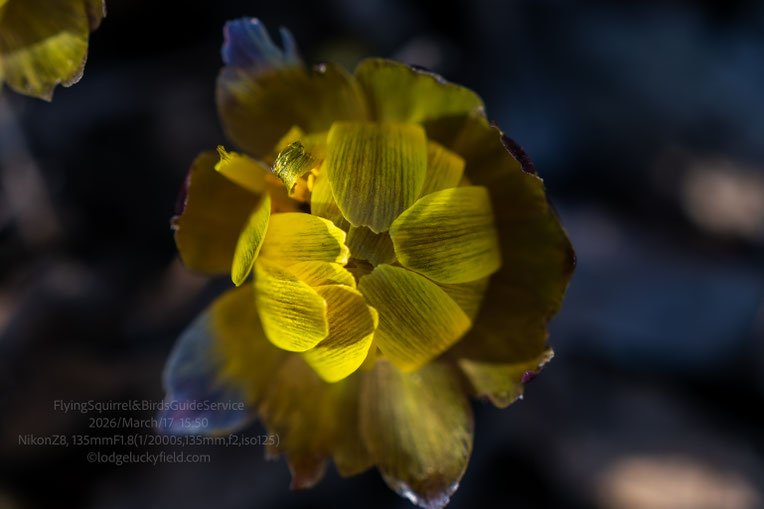
季節の進みはしっかりで、久しぶりに平野部のモモンガを見に行ったら、雪とけた森の林床で、フクジュソウが顔を出していた。The seasons are steadily changing, and when I went to see the flying squirrels in the lowlands for the first time in a while, I found Adonis flowers emerging from the forest floor where the snow had melted.
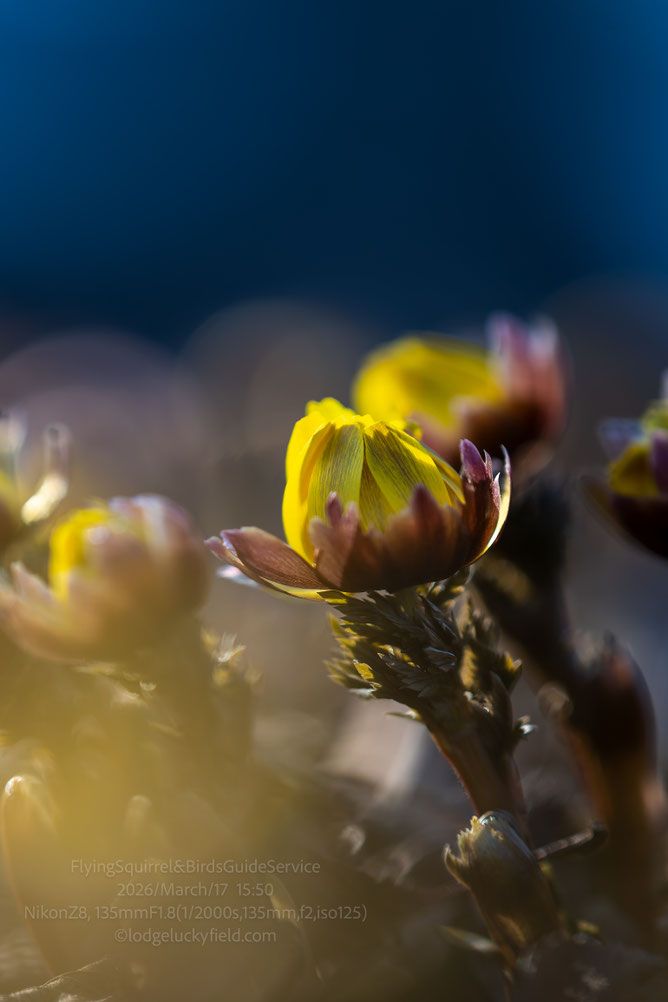
秋に積もった落ち葉を持ち上げて、顔をだした福寿草のつぼみは、注意して歩かないと踏んづけてしまいそうなほど、主張がなくて、美しかった。The buds of the Adonis flowers, lifting the fallen leaves that had piled up since autumn, were so subtle and unassuming that you could easily step on them if you weren’t careful—yet they were beautifully delicate
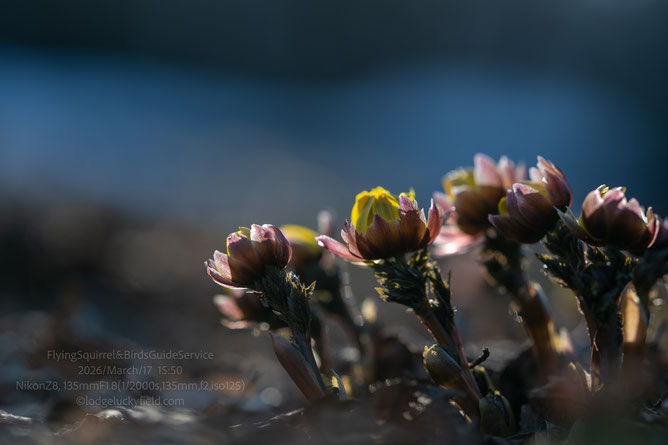
福寿草は、まだ氷点下のなかでも花を開く。朝晩の気温が低いときは花を閉じて、午前中の気温の上昇とともに蕾をひらき、パラボナアンテナのように太陽を取り込んで、花粉を成熟させるのだそう。こんな知恵をだれが授けたのか、そして生き抜く戦略がこの秘密にあるのだろう。面白いもの。Even in below-freezing temperatures, Adonis flowers can still bloom. When the morning and evening temperatures are low, they close their petals, then open their buds as the temperature rises during the day. Like a parabolic antenna, they capture the sun’s warmth to mature their pollen. Who could have given them such wisdom? Perhaps the secret to their survival lies in this very strategy. Fascinating, isn’t it
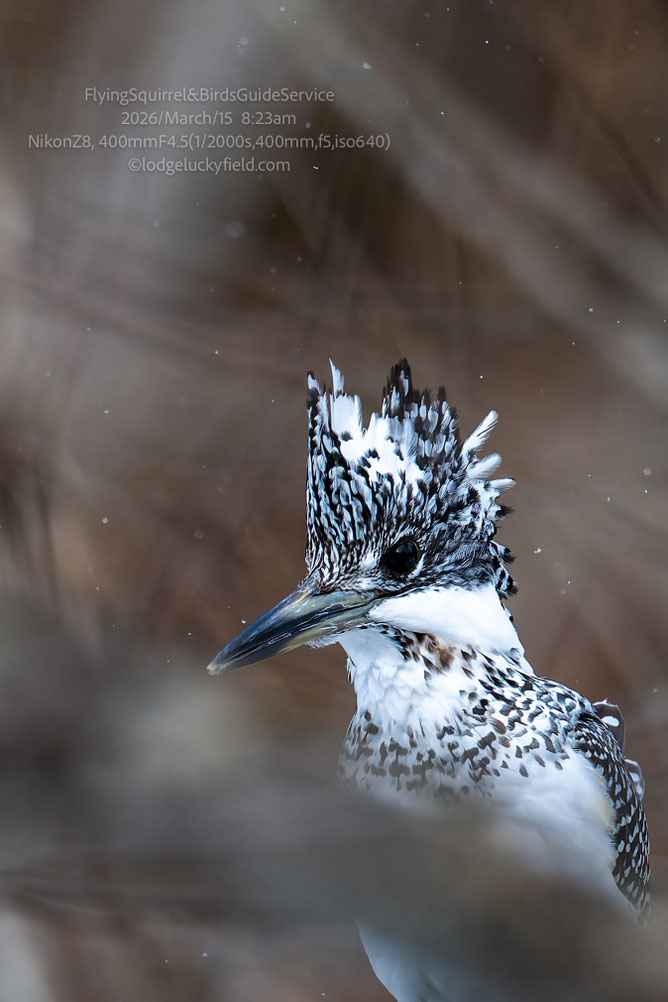
気温の上昇で動き始めたヤマセミだった。光の強さと、気温の上昇で、川を覆っていた氷が溶けはじめ、ユスリカの羽化というイベントに水面を揺らす鱒が泳ぐのが橋の上から見ることができたのがつい1週間ほど前からだった。それと同時にヤマセミがキャッキャと鳴いて、飛び交うので、魚を捕らえに来ると信じて待つこと、30分。やっぱり。目の前の枝にとまった。川の真下に飛び込んで、水面に波紋を広げて、飛び去る後ろ姿は、しっかりと10cmほどのオショロコマを咥えていた。見事な狩だった。
It was the crested kingfisher that had begun to stir with the rising temperatures. As the light grew stronger and the air warmed, the ice covering the river started to melt, and for about a week now I had been able to watch from the bridge as trout swam just beneath the surface, responding to the event of midge hatching.
At the same time, the crested kingfishers called out sharply and flew back and forth, and I waited—convinced they would come to catch fish. After about thirty minutes, there it was. It landed on a branch right in front of me, then plunged straight down into the river below. As it flew off, ripples spreading across the water’s surface, I could see it firmly holding an osmerid char of about 10 cm in its beak.
It was a superb hunt.
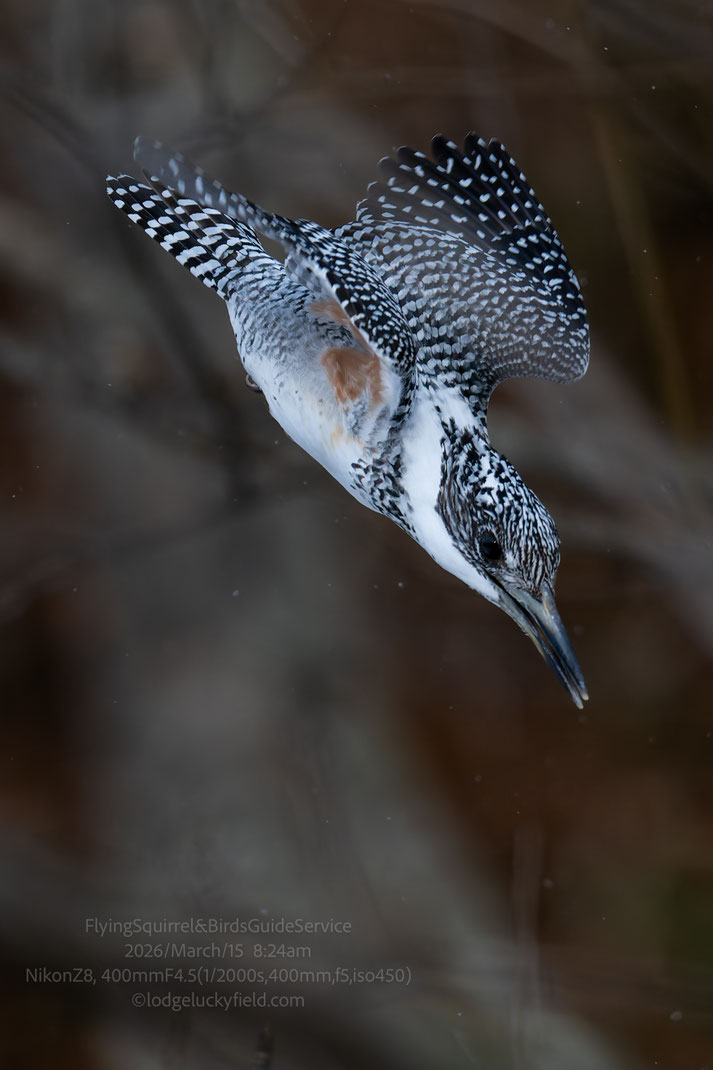
3月のエゾモモンガたちは、少し様子が変だった。朝巣穴に行くと、いつもは暗いうちから木の上で食事をしているのだけど、朝行くとエゾモモンガがいない。暗いうちに巣穴に戻ってしまったのか、何度かエゾフクロウが飛んでいくのを見ていたので、もしかしたらエゾフクロウの襲撃によるものと思っていた。In March, the Ezo flying squirrels seemed a little different. When I went to their burrows in the morning, they were usually up in the trees feeding before dawn—but when I arrived, they were nowhere to be seen.
I wondered if they had already returned to their burrows while it was still dark. I had also seen a Ezo owl flying by several times, so I began to suspect that it might have been due to their attacks
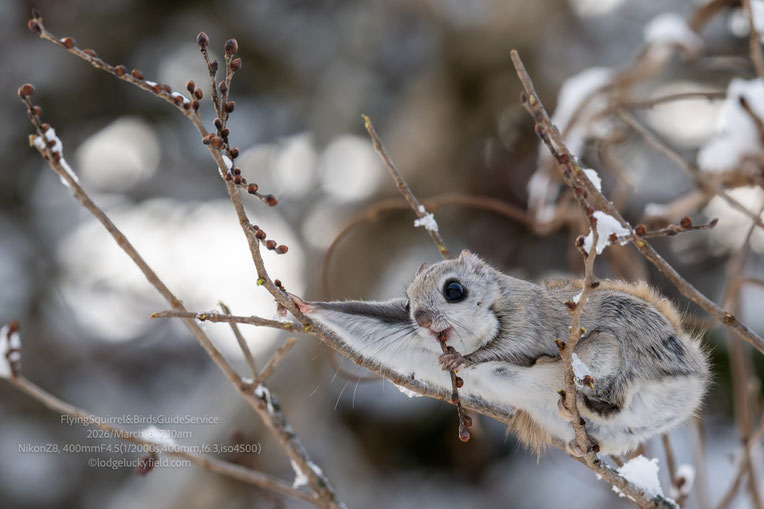

巣穴に到着すると、エゾモモンガの姿が見えないまま、巣穴の前で待っていると段々と夜が明けて明るくなってくる。すると巣穴からエゾモモンガが出てきた。朝なのに夕暮れのような行動に驚かされつつ、枝に乗ってしばらく様子を伺ってから、木に登っていつものハルニレの餌場へと飛んでいった。When I arrived at the burrow, there was still no sign of the Ezo flying squirrels. As I waited in front of the entrance, the sky gradually grew lighter with the coming of dawn. Then, one of the Ezo flying squirrel emerged from the burrow.
Though it was morning, its behavior felt more like dusk, which surprised me. It paused on a branch for a while, watching its surroundings, then climbed the tree and glided off toward its usual feeding site in a Japanese elm.
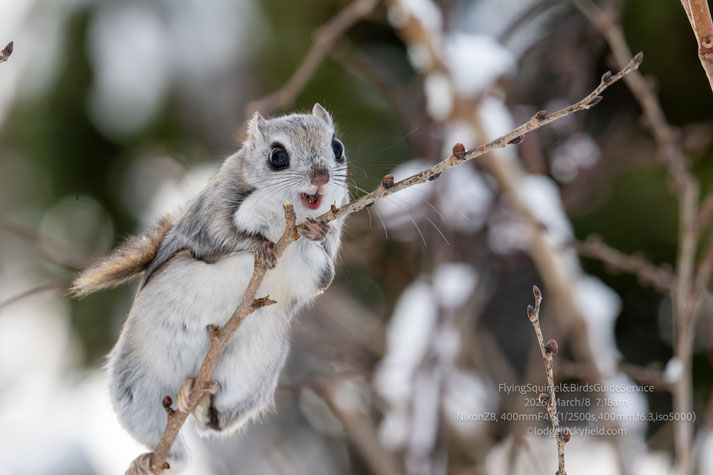
エゾモモンガが、私たち人間の到着を待っていたかのように、明るくなってから巣穴から出てくるので、もしかしたら人間がいることで、エゾフクロウやカラス、ハイタカなどの天敵からの襲撃を受けないことを知っているかのように思えた。It almost felt as if the Ezo flying squirrel was waiting for us humans to arrive—only emerging from the burrow after it had become light. It made me wonder if they understand that the presence of people can deter predators such as the Ezo owl, crows, and the Eurasian sparrowhawk, and that they are less likely to be attacked when we are nearby.
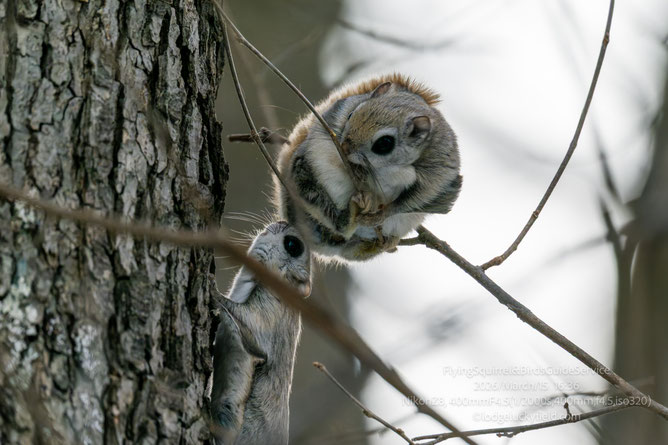
エゾモモンガたちの活動も、厳冬期の冬の活動から、春の活動に変化した。8匹いた冬の巣穴は、気温の上昇、モモンガのペアリングで、巣穴のモモンガたちは分散し、朝夕の行動で雄は雌の匂いを嗅ぎ、雌の発情を察しているようで、追いかけっこをみたり、メスを呼ぶ鳴き声を聞いた。雌の発情が来る日も近いと予測ができた。The activity of the Ezo flying squirrels has also shifted—from the deep winter pattern to their spring behavior.
The winter burrow that once held eight individuals has begun to break up as temperatures rise and pairing begins. The squirrels are dispersing, and during their morning and evening movements, the males seem to be scenting the females, sensing the onset of estrus. I’ve watched them chase one another and heard the males calling out to females.
It feels clear now that the females’ estrus is not far off.
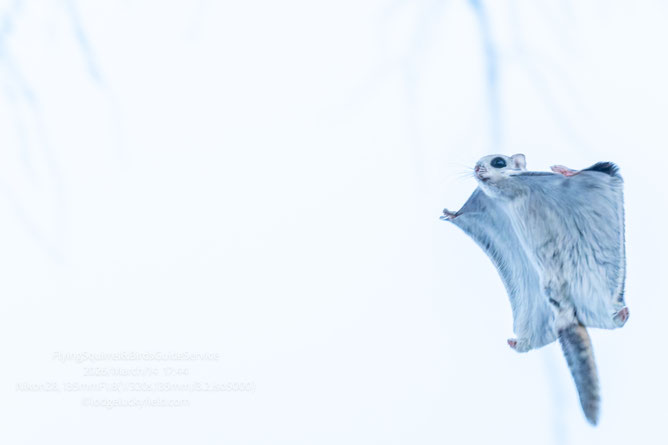
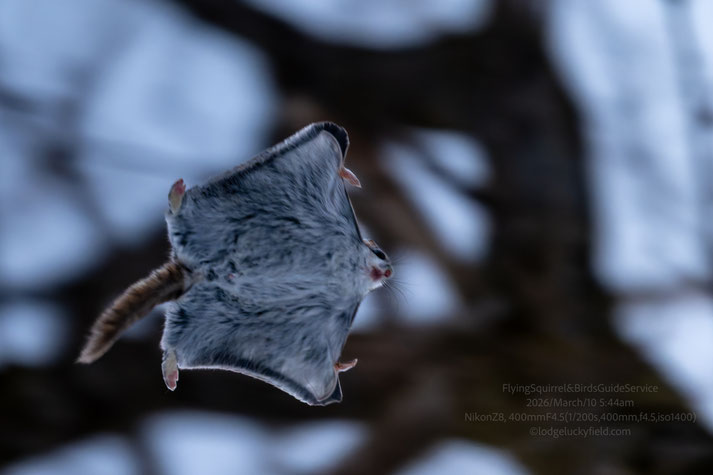
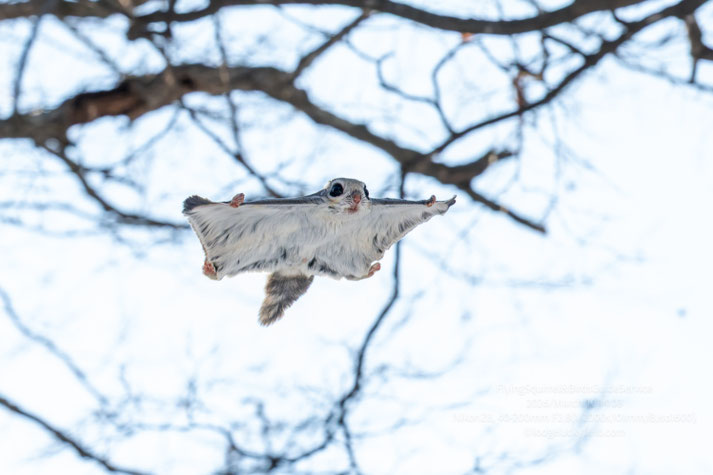
先週は、毎日のようにモモンガたちが日中に活動した。雌の発情を雄が気にしているようで、巣穴から出てきて、雌の巣穴へと飛んできた。ときどき雄どおしの追いかけっこになった。雌の発情がくると、雌が巣穴からでてきて、交尾となった。Last week, the flying squirrels were active during the daytime almost every day. The males, intent on the females’ estrus, would emerge from their burrows and glide over to the females’ nests. At times, this would turn into chases between rival males.
When a female entered estrus, she would come out of the burrow, and mating would take place.
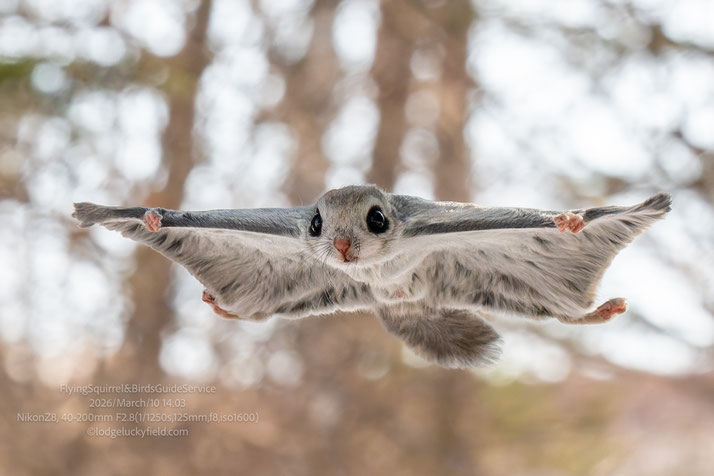

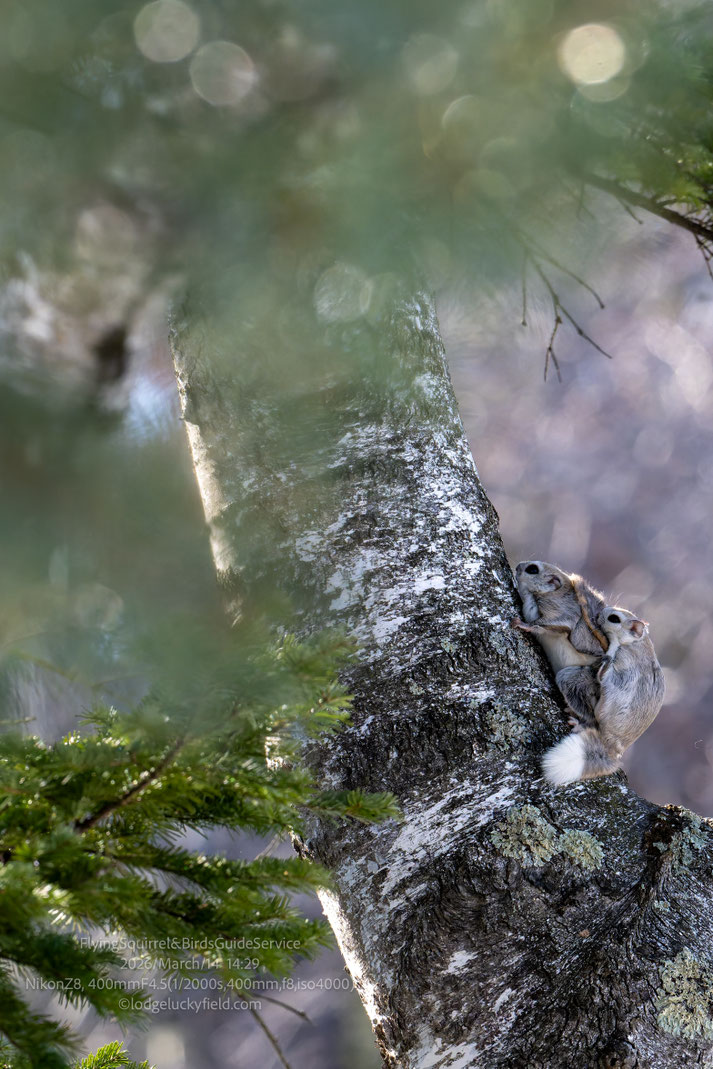
エゾモモンガと冬。私のエゾモモンガの観察、そしてガイドはエゾモモンガの交尾と共に終わる。10月紅葉がピークになると、エゾモモンガと紅葉の写真が撮りたくたって、巣穴の様子をチェックし始める。11月木々の落ち葉がなくなって冬の装いの森の季節から、本格的なエゾモモンガの観察とガイドがスタートする。そして季節は1月の厳冬期へとモモンガたちの密集の暮らしと雪のなかのモフモフ、モコモコの暮らしで冬を楽しむ。そして、2月頃から光が強くなって、気温が上がり始めると、エゾモモンガたちは、巣穴の分散、朝夕も暗い暮らしになっていく。そんな冬の終わりが、なんとなく寂しくて、なごり惜しい。そんなときに、最後の最後に盛り上がるモモンガの発情から交尾。これがモモンガのクライマックスで、これで冬をやり終えた感じになる。
Ezo flying squirrels and winter—my observation and guiding season with the Ezo flying squirrel comes to an end with their mating.
In October, when the autumn colors reach their peak, I begin checking the condition of their burrows, hoping to capture images of them against the fall foliage. By November, as the leaves have fallen and the forest takes on its winter appearance, the real season of observation and guiding begins.
Then comes January, the depth of winter, when the squirrels live closely together, enjoying their soft, fluffy lives in the snow. As February arrives and the light grows stronger and temperatures begin to rise, the squirrels start to disperse from their shared burrows, and their activity shifts to the darker hours of morning and evening.
The end of winter always brings a quiet sense of loneliness and reluctance to let go. And yet, just at the very end, there is one final surge of excitement—their estrus and mating. This is the true climax of the season, and with it, I feel that winter has been fully lived through.
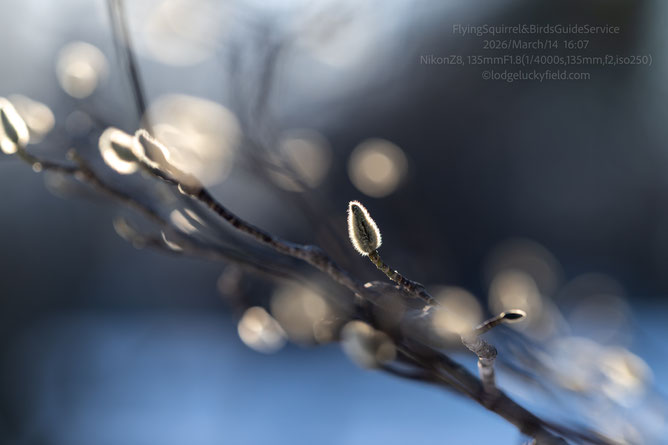
終わる季節と始まる季節。また新しい季節が駆け足でやってくる、冬に遅れを取らないように、毎日の変化を観察し続けた冬。そして、エゾモモンガから解放されるような春の訪れ。まだ時差ぼけのように、夜明け前に目が覚めてしまう。名残惜しい季節がまた気持ちがいい。he ending season and the beginning of another. A new season comes rushing in, as if not to fall behind winter—a winter spent observing the subtle changes of each day.
And then comes spring, almost like being released from the world of the Ezo flying squirrel. Even now, as if with lingering jet lag, I still find myself waking before dawn.
There’s something bittersweet about a season that’s hard to let go of—and somehow, that feeling itself is comforting
ガイドも無事に終えることができたことがなによりで、皆様楽しんで?もらえたと思います。いろんな自然のドラマに遭遇できたのも、お客様が持っている「運」。それに私も便乗させてもらって、ドキッとしたり、息をするのも忘れて写真を撮らせてもらった。美しいさは一瞬で、一瞬と再現されない難しさが、たまらなくいい。そんな、貴重な体験をまた次の季節もできたらと思う。できる限りのフィールドのチェックは自分のためにしっかりやって、またお会いする日を楽しみにお待ちしております。ガイドのスケジュールも次の冬もだいぶ埋まってきていますので、ガイドの予約はお早めに!どうもありがとうございました。More than anything, I’m simply grateful that the guiding season came to a safe and successful end, and I hope everyone truly enjoyed it.
The many moments of natural drama we were able to witness were thanks to the ‘luck’ each of you brought with you. I feel fortunate to have shared in that luck—there were times when I was so captivated that I forgot to breathe as I took photographs.
Beauty exists only for an instant, and its fleeting, unrepeatable nature is exactly what makes it so compelling. I hope we can share more of these precious experiences again in the next season.
I will continue to carefully check the field as much as possible for my own preparation, and I look forward to seeing you again. The schedule for next winter is already filling up, so please be sure to book your guide early